In Tunisia’s coastal waters, sharks are more than predators , they are silent victims of a struggle few see. As nets tighten and myths grow, a new wave of science and stories is rising, aiming to turn tides and give sharks a fighting chance. But can the nation’s stewards keep pace with the urgent call to protect these ancient guardians of the sea?
Are Tunisia’s Authorities Keeping Up with Shark Conservation Needs?
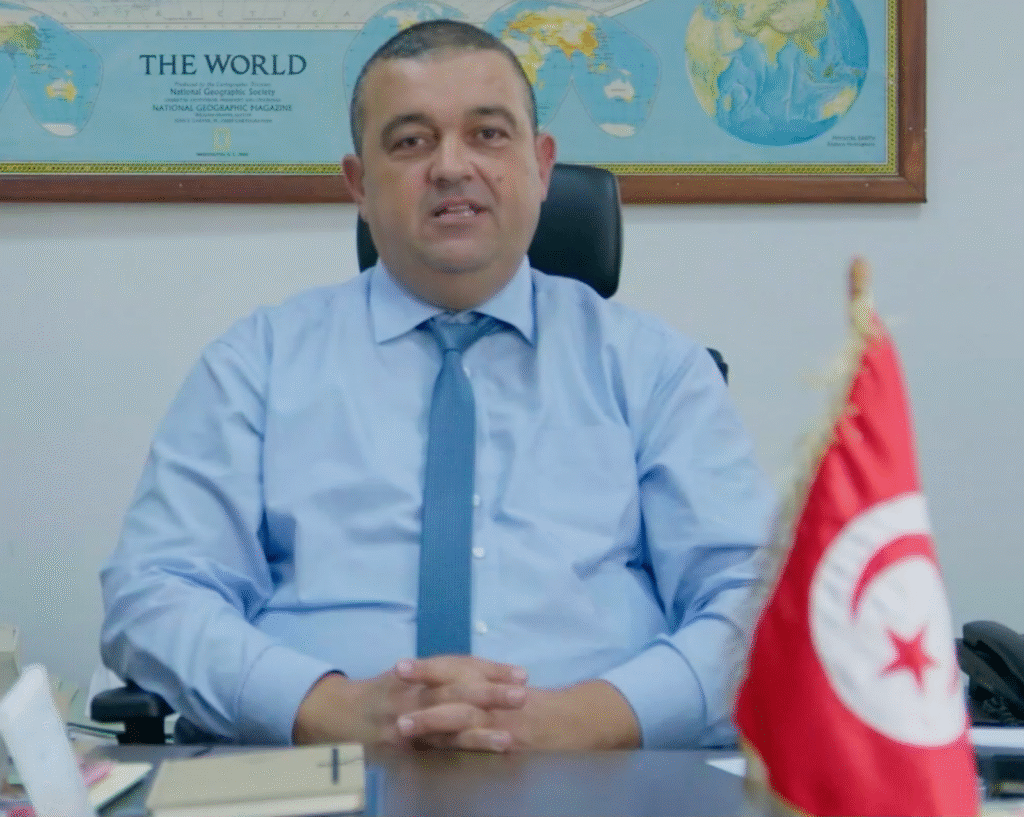
The conversation shifts when the law enters the room. Sitting behind his desk, the Director General of Fisheries, Ali Cheikh Sbouai, speaks carefully. Tunisia, he says, is in the middle of revising its fisheries regulations. The process is ongoing.
When asked about endangered species, he goes back nearly three decades, to a decision issued on 28 September 1995. It was meant to protect threatened marine species including cartilaginous species.
Ali Cheikh Sbouai said : “ protection is necessary but it has not yet been reached.”
Internationally, Tunisia is not absent. Sbouai lists the commitments. The Barcelona Convention, CITES, Regional and global agreements, all ratified. He says they operate on several levels. Laws are being aligned. Controls are being reinforced. Awareness campaigns are underway. On the ground, the Agency for Agricultural Extension and Training is tasked with educating fishers. Its mission is simple: explain why endangered species matter, and why balance at sea matters too.
But when the discussion turns to white sharks reportedly being landed, the tone changes. Sbouai refuses to comment on specific cases.
He said: “Violations can happen anytime. Markets are controlled. Landings are inspected.”
“Violations can happen anytime. Markets are controlled. Landings are inspected.”
Then comes the legal reality. He explains :”Landing an endangered species is not automatically illegal in Tunisia. Not yet.. Under the current framework, a violation only exists if the fish is undersized or caught with forbidden gear. If the equipment is authorized, and the size is legal, the landing stands, even if the species is internationally recognized as threatened.”
“It is a gap. A wide one..” , he added.
What international law forbids, national law does not always prevent. And without a clear ban, sanctions cannot be applied. Sbouai is blunt on this point. No one can be punished for an act the law does not explicitly prohibit. That is why, he says, international treaties must be fully translated into national legislation. Otherwise, they remain just intentions .
He adds:” The solution is already on the table. Align the treaties. Embed them into Tunisian law. The ongoing revision of Law No. 13 on marine fisheries is meant to do just that.”
Outside the office, concern keeps growing. Scientists warn of collapsing shark and ray populations. Tunisia hosts workshops, participates in Mediterranean initiatives and signs recommendations. But enforcement lags behind the words. Protections remain uneven. Many measures never make it past discussion.
It should be mentioned that the General Fisheries Commission for the Mediterranean (GFCM) has introduced strict rules to protect endangered sharks and rays across the region, including Tunisia. These rules ban the retention and sale of vulnerable elasmobranch species, aiming to curb their alarming decline.
Under GFCM Recommendation 36/2012/3, reinforced in 2018, Tunisia is legally required to safeguard sharks and rays listed in Annex II of the Barcelona Convention’s SPA/BD Protocol. This means fishermen cannot keep, land, sell, transport, or display these protected species. If caught accidentally, the animals must be released alive whenever possible.
A firm ban on shark finning is in place. Sharks must be landed with their fins attached, ensuring accurate identification and better enforcement. Tunisia is also obligated to monitor and report all catches, bycatch, and fishing activities involving these species.
Fishing methods must be adjusted to reduce harm, especially in critical nursery areas along the continental shelf where many young sharks and rays grow.
The list of protected species includes some of the Mediterranean’s most threatened marine species: the three critically endangered angel sharks (Squatina squatina, S. aculeata, S. oculata), the shortfin mako (Isurus oxyrinchus), porbeagle (Lamna nasus), white shark (Carcharodon carcharias), basking shark (Cetorhinus maximus), several hammerhead species (Sphyrna spp.), the giant devil ray (Mobula mobular), guitarfishes (Rhinobatos spp.), and critically endangered skates such as the Maltese and common skate complexes.
Together, these measures form the foundation of the GFCM’s shark conservation framework. Tunisia must enforce these protections as part of its commitment to preserving the region’s vulnerable marine life.
Yet in practice, endangered species still appear on docks and markets. Monitoring projects exist. Shortfin mako bycatch is being studied. Habitats are being mapped. What is missing is follow-through. Until law, science, and enforcement finally move at the same pace, Tunisia’s sharks remain caught between commitments made abroad and realities unfolding at sea.
Saving Our Sharks: Is Reversing Decline Possible?
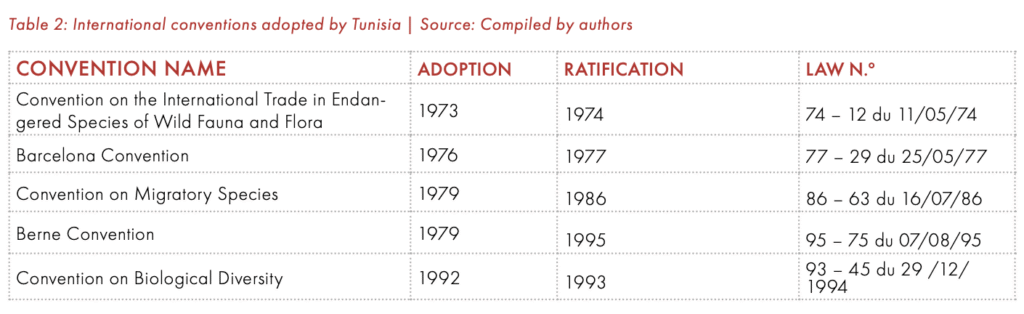
On the legal side, Saïdi speaks with caution. Tunisia, he notes, has signed nearly every major international convention on marine biodiversity and endangered species. Theorically, the commitments are there. Practically , the protection is absent. The real obstacle lies in turning these agreements into enforceable national laws.
Launched in 2019, the Mediterranean Angel Sharks Regional Action Plan (RAP) aims to halt and reverse the collapse of the Mediterranean’s three angel shark species, all classified as Critically Endangered: the angelshark (Squatina squatina), the smoothback angelshark (Squatina oculata), and the sawback angelshark (Squatina aculeata).
Developed by the Shark Trust and the Angel Shark Conservation Network with regional partners, the plan focuses on reducing fisheries-related mortality, protecting critical habitats, and strengthening national legal frameworks.
Although regional in scope, the RAP directly concerns Tunisia, where all three species are still recorded, particularly in sensitive coastal areas such as the Gulf of Gabès. In response, Tunisia has been discussing for several years a draft law dedicated to the protection of endangered shark species, largely inspired by this regional framework. Conservation efforts have included the creation of marine protected areas and the promotion of more sustainable fishing practices.
However, Saïdi stresses that these steps remain insufficient. Further scientific research is needed, alongside stronger conservation measures at sea and improved technical expertise among fishers involved in elasmobranch fisheries. These challenges are central to Tunisia’s efforts to meet its commitments under the Barcelona Convention and GFCM regulations banning the retention and trade of angel sharks.
Yet solutions are already emerging from the water itself. Among fishermen, Saïdi observes a growing awareness. Some, particularly those using surface longlines, have proposed practical compromises. Their idea is simple: reduce or temporarily suspend shark fishing, and shift effort toward licensed tuna fisheries. Not as a permanent solution, but as a bridge,one that protects sharks without cutting off income.
Science, he argues, must guide the next steps. Mapping breeding and nursery areas is essential. So is distinguishing juveniles from adults. These details matter. Protecting sensitive zones could allow authorities to establish marine protected areas or impose seasonal closures during reproduction. In those moments, when pregnant females and newborns gather, even a short pause in fishing could make the difference between recovery and collapse.
But conservation cannot survive on restrictions alone. Saïdi insists on economic alternatives. Fishers need support, compensation, and new opportunities. Without them, abandonment of shark fishing becomes a risk too great to take. Only a balanced approach can work, one that blends science, law, enforcement, and social justice.
On the docks, that balance is already taking shape. Fishers like Khouildi and Dahech speak less in policy terms and more in lived experience. They suggest fewer fishing days. One type of net instead of many. Catching adults, not juveniles. Leaving the future in the sea. They call for clear quotas, set by season and respected by all. Not to empty the ocean, they say, but to ensure it still provides.
For them, protecting sharks is no longer an abstract idea. It is about survival, of the species, and of the people who depend on the sea.
With a voice heavy with resignation, Dahech poses the question few want to confront. If sharks continue to disappear, crushed between bottom trawling and collapsing stocks and if the government moves to ban shark fishing without offering alternatives, what will remain for local fishers?
For him, the equation is brutal. If sharks go extinct, fishers lose their livelihood. If bans are imposed without support, they lose it just the same. Caught between conservation and survival, Dahech sees no safety net. “If this continues,” he says, “I’ll have no choice but to sell my boat.” For Dahech, that would not just mean leaving the sea, it would mean abandoning a life shaped by it, forever.
A Model for the Mediterranean: Saving Sharks One Egg at a Time
In Malta, a rare conservation success story is quietly unfolding. It is led by Sharklab-Malta, a non-profit, volunteer-driven organization dedicated to research, education, and public awareness on elasmobranchs, sharks, rays, skates, and chimaeras, in the Mediterranean.
For Mahailee Parker, science officer at Sharklab-Malta, the situation could not be more urgent. “The Mediterranean is a small sea,” she explains. “Sharks here absorb all the pressure, overfishing, habitat destruction, pollution, and there is nowhere left for them to escape.” Today, nearly half of all shark and ray species in the Mediterranean are threatened, she warns.
The main driver of this collapse is commercial fishing, particularly destructive gear such as bottom trawlers and non-selective nets. Designed to catch everything in their path, these methods scrape the seabed, disturbing habitats and wiping out marine life indiscriminately.
Faced with this reality, Sharklab-Malta chose innovation over resignation. Their flagship initiative targets egg-laying shark species with a simple but powerful idea: save “Oviparous Species Eggcase Recovery and Release Programme,” the next generation before it is lost.
Every morning, volunteers head to fish markets at dawn. In barely an hour, they document everything they can, species, numbers, sex, and size of sharks landed. When they encounter oviparous species, they carefully recover egg cases from gravid females already caught by fisheries. The eggs are placed in seawater containers and transferred to Sharklab facilities, where they are monitored and allowed to develop.
Once hatched, the young sharks are raised in controlled conditions, often in partnership with aquariums, until they are strong enough to survive on their own. Nearly a year later, they are released back into the sea.
“Our job,” Parker says simply, “is to get sharks back into the water.
Mapping Hope: Science Is Drawing New Lines to Save Sharks
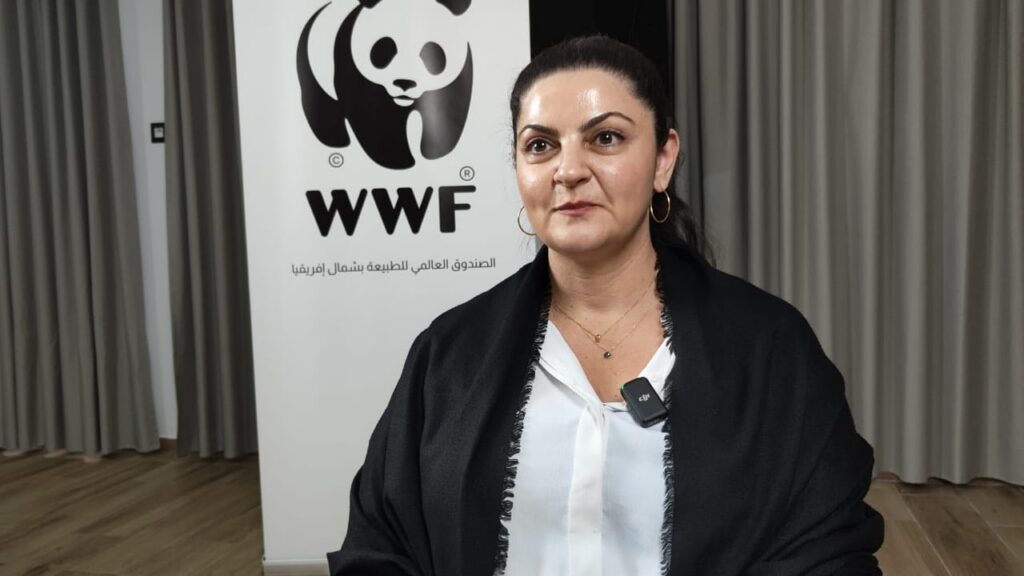
We met Dr. Rima Jabado, one of the world’s leading voices in shark and ray conservation and Deputy Chair of the IUCN Species Survival Commission (SSC) and Chair of the IUCN SSC Shark Specialist Group. She explains that through Important Shark and Ray Areas (ISRAs) , a science-based global initiative identifying critical habitats for sharks and rays ,the goal is simple but strategic: to ensure that solid, accessible information reaches policymakers.
“We are still working across the world to identify these areas,” she says, adding that the global mapping effort is expected to be completed by next year.
Tunisia, she notes, is already part of this process. With the support of Tunisian scientists and experts, several ISRAs have been identified using locally contributed data. This collaboration has helped pinpoint where species occur and which ISRA criteria apply to specific areas.
For Jabado, this opens a clear opportunity: local scientists can now work directly with their governments, ensuring that this information is recognized, valued, and translated into action.
Some of these areas, she stresses, are seasonally critical, particularly for reproduction. In such cases, governments should consider seasonal closures or restrictions on destructive fishing gear, allowing shark and ray populations the space and time they need to recover.
ISRAs themselves are not protected areas, but defined boundaries highlighting ecological importance. What happens within those boundaries, Jabado explains, can be addressed through a wide range of policy tools, from spatial planning to fisheries management measures.
Her recommendation for Tunisia is straightforward, and urgent: work together. Create space for people who care about sharks and rays to contribute, whether through research on life history, policy development, education, or fieldwork. “There is too much to do,” she warns, “and very little time, while populations continue to decline.”
Shifting Perceptions: The Media’s Critical Role in Saving Sharks
The media is a powerful tool in the fight to protect sharks, yet much of what the public sees today still emphasizes fear over facts. Research shows that traditional news coverage often focuses on human‑shark interactions and dramatized “attacks,” rather than the real crises these animals face, such as overfishing, bycatch and habitat loss issues that scientists say drive declines far more than rare human encounters.
A study published in iScience found that popular press articles are frequently biased and oversimplified, which can misinform the public about both threats and policy solutions for shark conservation.
Academic analyses also show that mainstream media tend to highlight danger to people instead of danger to sharks, shaping public perceptions in ways that can undermine support for conservation measures. Conservation researchers argue that reporters and media outlets should work more closely with scientists to present balanced information about shark ecology and threats.
Shark specialist Rima Jebado says: “Media today must portray sharks right and spread their true image, far from being threats or dangers.” Accurate and balanced reporting can shift public perception by highlighting the real challenges sharks face ,overfishing, habitat loss, and bycatch while showcasing their vital role in marine ecosystems.
Trusted media coverage, backed by scientific research and NGO insights, can also raise awareness about conservation policies like the GFCM regulations and regional action plans. By amplifying voices of scientists, fishers, and local communities, the media helps build the knowledge and support needed to protect these endangered species. Responsible journalism is essential to move beyond myths and inspire effective conservation action.
Sharks and rays play a key role at the top of the food chain. Their slow growth and low reproduction make them highly vulnerable to fishing pressure. To protect these important species in Tunisia and the Mediterranean, urgent actions are needed.
Better data collection at sea and on land is essential. This includes tracking species distribution and improving landing statistics by species or groups. Training fishers and officials to identify species correctly is also critical.
Studies should expand to map critical habitats and measure how many sharks and rays are discarded by different fishing gears. Testing and applying bycatch mitigation measures must be increased.
Stock assessments and biological research need development, especially on migration patterns using satellite tracking. Elasmobranchs represent about 2% of Tunisia’s fish production, with an average of 2,370 tons landed yearly, mostly by small-scale fisheries using gillnets, trammel nets, longlines, and trawling.
Bycatch is a major concern. Juveniles are often caught by trammel nets and trawls, while gillnets mainly capture adults and pregnant females. Without stronger protections, these vulnerable populations risk further decline.
Saving sharks is not about nostalgia for a vanishing species, it is about accountability. The science is clear, the warning signs unmistakable, and the window for action rapidly closing. What happens next depends on choices made now: whether laws are enforced, destructive practices restricted, data transparently collected, and fishers supported through just and realistic transitions.
Because once sharks disappear from Tunisian waters, the collapse will not stop with them. Ecosystems will unravel, livelihoods will follow, and the sea will remember our inaction long after the last fin is gone. This is the moment to act ,not after the damage is complete, but before the silence becomes permanent.
Copyright © 2026 Blue Tunisia. Tous droits réservés